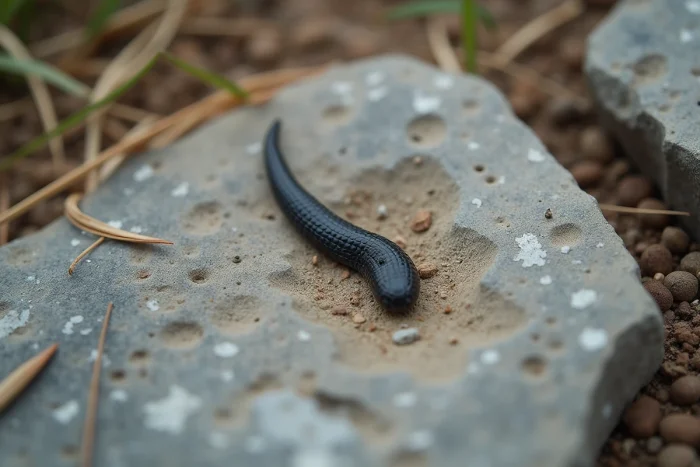
You come across a small dark pile at the foot of a wall, near a woodpile or in a patch of ground cover plants. The first reflex is to think of a rat or a weasel. This confusion is common, especially in peri-urban gardens where several species of snakes are recolonizing wastelands and the outskirts of homes.
Knowing how to recognize snake droppings allows you to confirm their presence, adapt the maintenance of your land, and avoid handling potentially contaminated waste.
White urates attached to feces: the decisive criterion
The most reliable characteristic for distinguishing snake droppings from those of mammals is the double component visible to the naked eye. Snakes expel feces (dark brown to black pellets) and urates, a solid urinary residue, white or yellowish, that sticks to the rest.
In mammals (rat, marten, weasel), urine and feces come out separately. You never find this chalky deposit attached to the droppings. When you spot this brown-black combination with a whitish mass, you can reasonably conclude it’s a reptile, and in our regions, a snake.
To identify snake droppings in images, we first rely on this double component criterion before looking at size or color, which vary greatly depending on the species and the last meal.

Color and content of snake droppings according to diet
The color provides clues about what the snake has eaten recently. A very dark, almost black pellet indicates a recent protein meal (rodent, lizard, nestling). Lighter shades, leaning towards greenish brown, signal a prolonged fast or a prey of a different nature.
By inspecting the droppings more closely (with gloves), you can spot undigested fragments. Snakes swallow their prey whole, leaving characteristic traces in the feces:
- Tiny bone fragments, sometimes recognizable (flattened rodent skull, vertebrae)
- Lizard or fish scales, shiny and rigid, which are never found in mammal droppings
- Tufts of matted fur, compacted differently from a raptor’s pellet
- Remnants of chitin (insect exoskeletons) in smaller species like the smooth snake
This presence of whole prey remains clearly distinguishes snake droppings from those of other garden animals, which digest or sort their food differently.
Confusion with rat or weasel droppings: points of comparison in the field
In the field, the most common confusion occurs with rat droppings and, to a lesser extent, those of weasels or martens. The return of certain snake species to gardens and urban wastelands increases these identification errors.
Rat droppings versus snake droppings
Rat droppings are elongated, firm pellets of fairly regular size. They are deposited in numbers (several dozen in the same spot) and never have a white part attached. The snake, on the other hand, leaves a single mass or a small compact group, always accompanied by its urates.
Weasel or marten droppings
Mustelid droppings are tapered, often twisted, with a very pronounced musky odor. They contain fur and bone fragments, which can cause confusion. The difference lies in the absence of urates and the twisted shape, which is not found in snakes.
An additional clue used by field herpetologists: the necrophagous insects attracted to snake droppings are not the same as those that colonize mammal droppings. The droppings rich in chitin and whole prey bone fragments attract specific coprophagous beetles, absent from the fibrous droppings of herbivorous or omnivorous mammals.
Handling precautions and health risks of snake droppings
Snake droppings may contain eggs of parasites transmissible to humans and domestic animals. Nematodes and coccidia are regularly identified in snake droppings, including in wild specimens.
To clean safely, strict rules should be followed:
- Wear disposable gloves, even for a simple pickup in the garden
- Disinfect the contact area with a product suitable for reptilian pathogens (biosecurity protocols in farming recommend different solutions than those used for mammals)
- Wash hands immediately afterward, even if wearing gloves
- Prevent dogs and cats from sniffing or licking droppings found on the ground
Reports vary on the persistence of certain pathogens in the soil, but caution remains advisable, especially if children or pets frequent the area.
Typical places to spot snake droppings in a garden
Droppings are not found just anywhere. Snakes often defecate in their resting or thermoregulation areas: the foot of a wall exposed to the south, under metal sheets or tarps, near a compost bin, or inside a rarely used garden shed.
Regularly checking these spots allows you to detect a presence without having to observe the animal directly. Fresh droppings (shiny, urates still moist) indicate recent activity. Dry and crumbly droppings, with urates turned to powder, date back several days or weeks.
The location of the droppings, combined with their appearance, gives a fairly reliable picture of a snake’s activity on a property. Before attempting to remove the animal, this identification step helps to know which species you are likely dealing with, which radically changes the course of action.