Every month brings its share of cosmetic launches, but not all deserve a place in your kit. To sort through the formulas that truly change a beauty routine from mere marketing stunts, a reliable criterion is to cross-reference market dynamics with the actual composition of products.
In September 2026, two segments are driving demand upwards: fragrance and sun protection, according to the Beauty Pulse 2026 report from Spate relayed by Expression Cosmétique. Makeup, on the other hand, is stabilizing. Understanding these movements helps direct your purchases towards truly relevant beauty essentials this month.
Beauty category dynamics in September 2026: where demand is headed
| Category | Search Trend | Relevance for your routine |
|---|---|---|
| Fragrance | Strong growth | Seasonal renewal, new autumn compositions |
| Facial sun protection | Strong growth | Daily SPF maintained after summer, hybrid care-sun formulas |
| Makeup | Stabilization | Few technical breaks, prioritize multifunctional bases |
| Hair care | Slowdown | Saturated market, target post-summer repairing formulas |
This table reflects data from the Beauty Pulse 2026 report from Spate. The growth of fragrance and sun protection is not anecdotal: it reflects a sustainable shift in demand, not just a summer peak. Facial sun protection remains relevant well beyond summer, as hybrid formulas now incorporate anti-aging and anti-spot actives that justify year-round use.
On the other hand, the slowdown in hair care signals an oversaturation of the offer. Before investing in yet another hair serum, check that the formula targets a specific need (post-sun repair, deep hydration) rather than a vague promise of shine.
To guide your purchases among this month’s new products, Le Blog Beauté’s shopping selection groups tested products categorized, making it easier to sort between promising launches and dispensable references.
Multifunctional products vs. layered routines: which format to prioritize
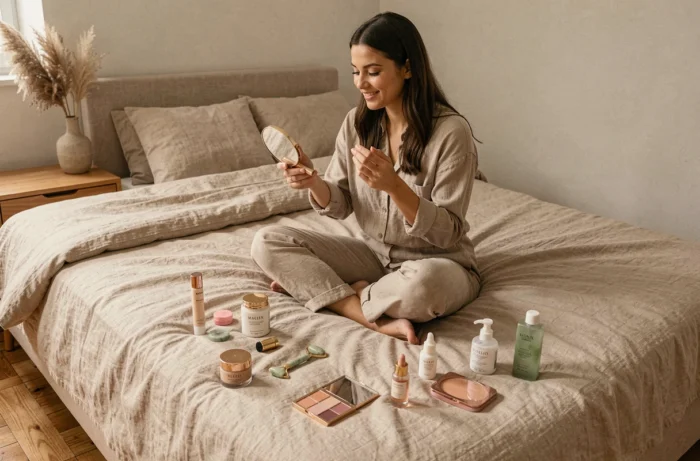
The competitors listed this month are heavily betting on hybrid products. The blurring care that replaces foundation, the 4-in-1 tinted balm, the SPF integrated into the serum: the trend towards multifunctional formulas is no longer a niche. It responds to fatigue with ten-step routines.
A well-formulated multifunctional product reduces the number of layers without sacrificing effectiveness. The selection criterion is not the number of functions claimed on the packaging, but the actual concentration of actives. A SPF 30 integrated into a tinted cream protects as much as a dedicated sunscreen only if the applied amount is sufficient.
Three criteria to evaluate a multifunctional product
- The INCI list should place the claimed actives (UV filters, niacinamide, hyaluronic acid) in the first third of the composition, indicating significant concentration
- The format should allow for a proper application amount: a tinted SPF applied with just a fingertip does not truly protect from the sun
- The texture should not compromise wear: a 4-in-1 balm that migrates into facial creases after two hours loses its makeup function
If a product ticks these three boxes, it legitimately replaces two or three steps. Otherwise, it’s better to layer dedicated formulas.
Refillable packaging and labeling: what the European regulation 2025/40 changes
The regulation (EU) 2025/40 gradually imposes new requirements regarding sustainability and labeling of cosmetic packaging. For a beauty purchase in September 2026, this regulation offers a concrete filter: distinguishing truly refillable products from mere marketing promises.
A bottle labeled “refillable” without a refill available in-store or online does not meet the spirit of the text. Before paying a premium for so-called eco-designed packaging, check two points: is the refill available at a lower price than the initial product, and is the container actually designed to be reused for multiple cycles.
Recycled and recyclable materials: looking beyond the green logo
A package made from recycled plastic is not automatically recyclable. The percentage of integrated recycled material and the local collection system determine the actual impact. Brands that display a precise percentage of post-consumer recycled (PCR) material on their packaging are playing it transparently.
This labeling criterion is becoming a measurable competitive advantage. During your beauty shopping this month, a glance at the PCR mention or the Triman recyclability pictogram (mandatory in France) informs you better than marketing talk about a brand’s commitment.
Back-to-school beauty selection: product categories to watch closely
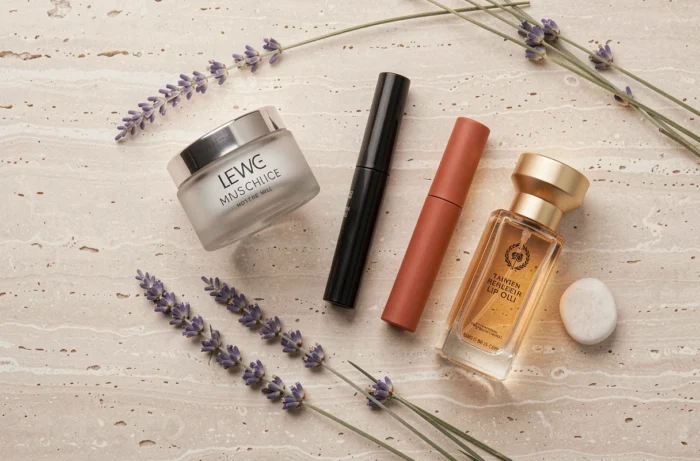
Rather than a list of references that will be outdated in four weeks, focus your purchases on the categories whose dynamics justify a renewal this month.
- A hybrid facial SPF (anti-aging or anti-spot care with integrated sun filter) remains the most cost-effective product of the back-to-school season, applicable daily until November
- An autumn fragrance with woody or amber notes, a segment showing strong growth according to Spate, deserves a try in-store before purchase
- A multifunctional base-tint product (blurring, tinted balm) to replace the layering of foundation plus primer
- A targeted post-summer hair repairing treatment, provided it contains proteins or ceramides in significant concentration, not just a re-labeled conditioner
The most useful reflex before finalizing a beauty basket is to check the INCI list and the actual availability of refills. A well-chosen product based on composition and sustainability criteria serves your routine better than an accumulation of new products driven solely by the launch effect.