Kipling backpacks are made from crinkled nylon (polyamide), a lightweight synthetic fiber that attracts little dust but does not react well to harsh products. Cleaning a Kipling backpack requires respecting this material to preserve both its characteristic texture and its original water-repellent treatment.
Kipling crinkled polyamide: why machine washing is problematic
Kipling advises against machine washing in its care instructions, even on a delicate cycle. The reason lies in the structure of the fabric: crinkled nylon receives a water-repellent treatment in the factory that protects the bag from light splashes. A washing machine drum, even at low temperatures, subjects the fibers to repeated mechanical friction that degrades this treatment.
The padding in the straps and back also loses its shape after spinning. The zippers, often made of lightweight metal, can become deformed or jam. Many online guides still suggest the delicate cycle as a quick solution, but this approach significantly shortens the lifespan of the backpack.
To learn how to clean a backpack effectively while respecting its material, hand cleaning remains the safest method for a Kipling.
Hand cleaning a Kipling backpack: method and suitable products
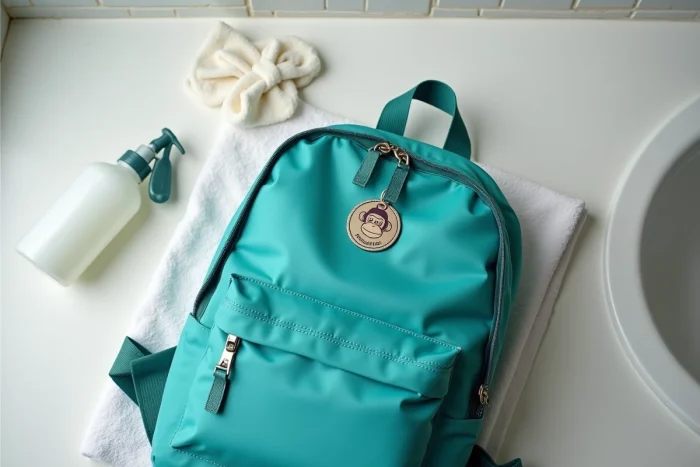
The principle is simple: warm water, mild soap, and a clean cloth. The difficulty lies in the execution details.
Preparing the backpack before cleaning
Empty all pockets, including pen compartments and small inner pockets where crumbs and debris accumulate. Turn the bag inside out and shake it over a trash can. Use a low-power vacuum cleaner in the corners if any residue persists.
Detach removable accessories (monkey keychain, detachable straps) before wetting anything. These elements should be cleaned separately to avoid color transfer.
Washing the backpack without damaging it
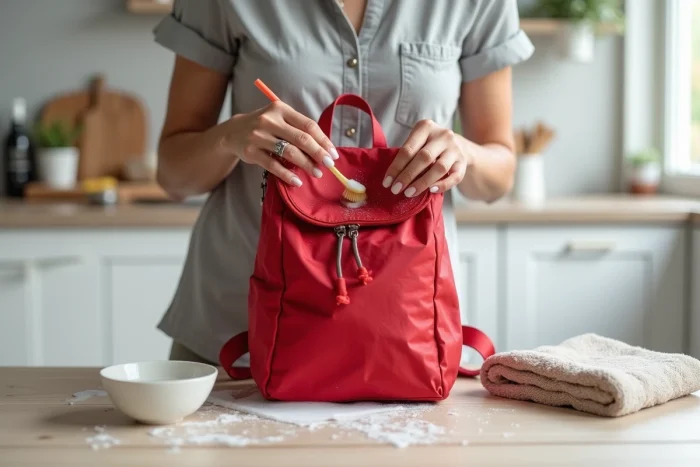
Fill a basin with warm water (not hot) and add a few drops of Marseille soap or neutral dish soap. Soak a soft cloth or a non-abrasive sponge, wring it out, then rub in circular motions on the dirty areas.
- Start with the dirtiest areas: bottom of the bag, straps, top handle, which accumulate everyday dirt
- Rinse the cloth regularly to avoid redepositing dirt on the fabric
- Avoid saturating the nylon with water: a damp cloth is sufficient, there’s no need to soak the entire backpack in the basin
- For seams and corners, use an old soft toothbrush with the same soapy water
Then rinse with a clean cloth soaked in clear water to remove any soap residue. A dried soap residue on the polyamide leaves visible white marks on dark colors.
Ballpoint pen stains on a Kipling backpack: targeted stain removal
Ballpoint pen stains are among the most common on a child’s backpack. Oil-based ink quickly penetrates the fibers of polyamide, making traditional cleaning with soapy water insufficient.
Household alcohol applied with a cotton swab works on most ballpoint ink. Dab the stain without rubbing to avoid spreading it. Renew with a clean cotton swab as soon as it picks up ink.
Diluted white vinegar is a gentler alternative. Mix one part vinegar to two parts water, apply to the stain with a cloth, let it sit for a few minutes, then dab.
Test any stain remover on a hidden area of the backpack (under a strap, inside a pocket) before applying it to the visible part. The dyes used in Kipling bags, especially bright colors, can react to solvents and cause localized discoloration. This precaution is particularly important for recent shades, as dyeing processes have evolved towards formulations that are more sensitive to chemical agents.
Products to never use on Kipling nylon
- Bleach and chlorine-based stain removers: they attack polyamide fibers and cause irreversible pilling in addition to discoloration
- Strong solvents (acetone, white spirit): they dissolve the surface treatment and can stiffen the fabric
- Scented disinfectant wipes: their chemical composition varies too much from one brand to another to guarantee safety on dyed nylon
Drying and regular maintenance of a Kipling bag
Drying affects the final result as much as washing. A poorly dried Kipling backpack develops musty odors within a few days, especially in a closed closet.
Open all zippers, turn the inner pockets inside out, and hang the backpack upside down in a ventilated area, away from direct sunlight. UV rays degrade the color of polyamide and accelerate the aging of the fabric. Avoid the dryer, which causes the same mechanical damage as the washing machine.
Allow several hours for air drying. Placing crumpled newspaper inside the bag helps absorb residual moisture and maintains the shape of the backpack during drying.
Preventive maintenance between washes
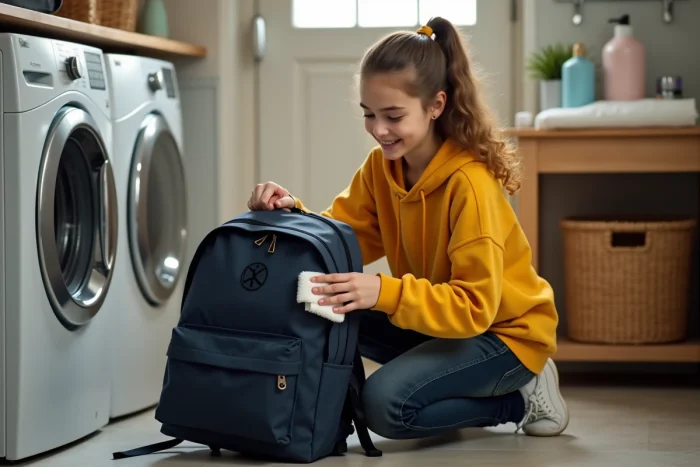
A quick wipe with a damp sponge each week on contact areas (bottom, straps, handle) is enough to limit dirt accumulation. Emptying and shaking the backpack on Friday evening prevents crumbs and pen residue from embedding in the seams over the weekend.
Storing the backpack open rather than closed when not in use allows the fabric to breathe and reduces the risk of odors. This simple gesture extends the intervals between complete cleanings, preserving the water-repellent treatment for longer.