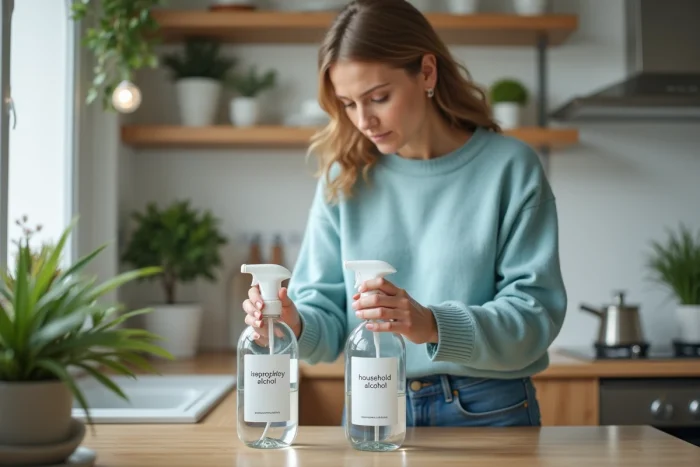
Isopropyl alcohol has a higher disinfection rate than many household alcohols available on the market. However, some products sold under the names “denatured alcohol” or “household alcohol” contain additives that alter their effectiveness and safety depending on the use.
Each type of alcohol has its own specifics: concentration, composition, method of application. Recommendations from authorities are based on strict criteria to ensure reliable cleaning without compromising performance or safety.
Isopropyl alcohol and household alcohol: what are the differences for cleaning and disinfection?
Behind the word “alcohol,” two distinct realities clash in the home. Isopropyl alcohol, the star of laboratories and high-tech, stands out for its purity and formidable effectiveness against bacteria and viruses. Its formula, based on concentrated isopropanol (at least 70%), packs a punch: as a result, it eliminates microorganisms while respecting delicate surfaces, especially those of electronic devices or medical equipment.
Household alcohol, on the other hand, finds its way into cupboards for routine maintenance. It is most often diluted ethanol, enriched with additives: fragrances, colorants, sometimes white vinegar. It holds up well against grease stains or ingrained dirt. But when it comes to pure disinfection, it cannot compete with isopropyl alcohol. On a doorknob or a countertop, the difference is significant.
| Characteristic | Isopropyl Alcohol | Household Alcohol |
|---|---|---|
| Active Substance | Isopropanol 70 %+ | Ethanol, additives |
| Main Use | Disinfection, electronics | Maintenance, cleaning |
| Disinfectant Properties | High | Medium |
Choosing between the two depends on the intended goal and the type of surface. The article isopropyl alcohol or household alcohol details the scenarios. Before using a cleaning product, read its label carefully: concentration, composition, and recommended use make the difference between effectiveness and disappointment.
In which cases should you favor one or the other for effective disinfection at home?
Precision of uses, targeted effectiveness
To tackle germs on high-risk areas, such as doorknobs, switches, phones, and exposed surfaces, the most effective solution remains isopropyl alcohol. Its high concentration neutralizes bacteria and viruses in record time, without leaving traces or harming sensitive materials. It is the reference in the medical field, but also a valuable ally at home for disinfecting without damaging (screens, keyboards, electronic objects). A clean cloth soaked in the product is enough to ensure hygiene and safety.
On the other hand, for daily maintenance or general cleaning, household alcohol is up to the task. Used pure or diluted, it adapts to windows, floors, sanitary facilities, doorknobs, textiles… It removes grease marks, eliminates certain odors, and readily combines with ingredients like white vinegar or essential oils in homemade recipes. For deep disinfection, it has its limits, but for routine maintenance, it remains a reliable choice.
Here, for clarity, are the suitable uses for each type of alcohol:
- Isopropyl Alcohol: disinfection of electronic devices, frequently touched surfaces, objects handled daily.
- Household Alcohol: routine cleaning, maintenance of floors and washable surfaces, windows, fabrics, preparation of homemade solutions based on black soap or white vinegar.
In summary, the best option depends on the desired goal and the required level of hygiene. For high-exposure areas or times when vigilance is necessary, isopropyl alcohol takes the advantage. For everything else, household alcohol does the job, provided that dosages are respected and the method is adapted to each surface.
Practical tips and precautions for safe and optimal use of alcohol in daily life
Reasoned handling, guaranteed protection
Whether it is isopropyl alcohol or household alcohol, careful handling is essential. Their flammable and volatile nature leaves no room for improvisation: work away from any heat source and ventilate the rooms generously during their use, whether for domestic or more intensive use.
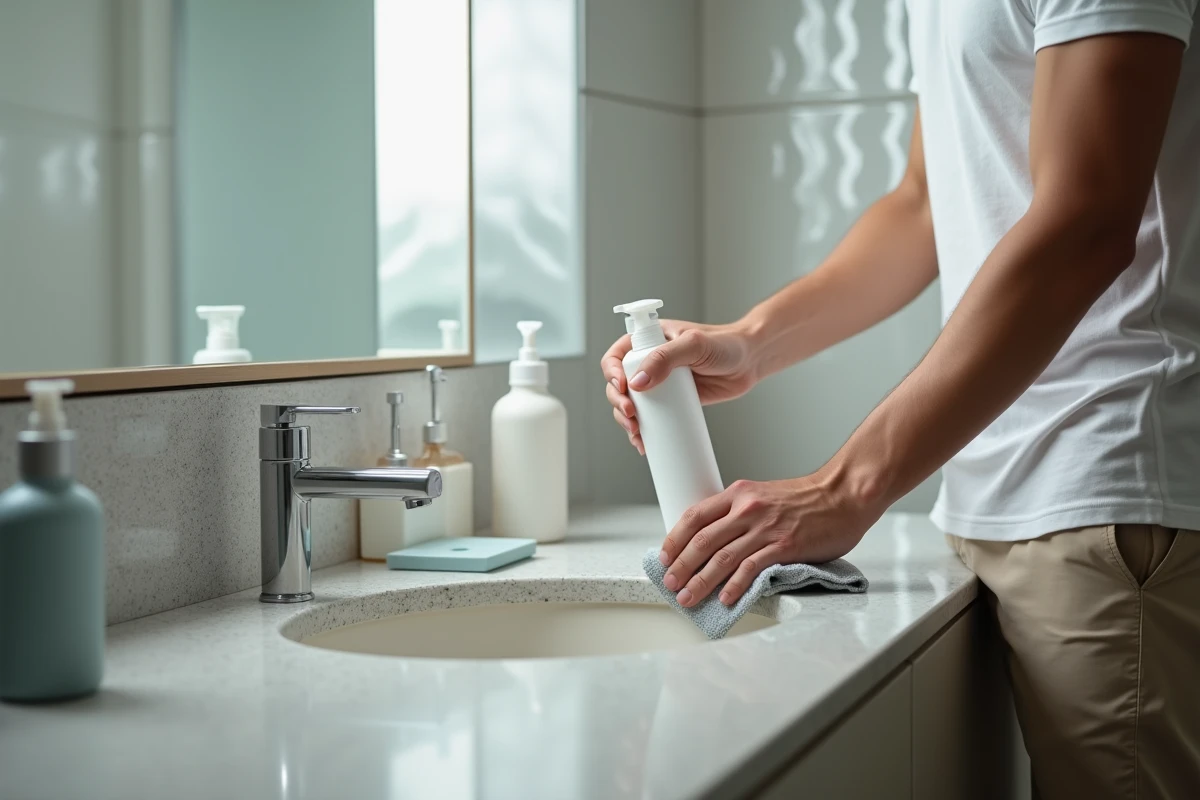
For effective cleaning, apply the alcohol to a microfiber cloth rather than directly on the surface: this allows for better dosing of the product and avoids streaks. On electronic equipment, isopropyl alcohol, possibly diluted, disinfects without harming internal components. A simple gesture that preserves both the object and your health.
Some simple precautions can help avoid unpleasant surprises:
- Always store your cleaning products out of reach of children and pets.
- Remember to label each bottle and store them in a dry place, protected from temperature variations.
- Wash your hands thoroughly after each use.
Household alcohol can be used pure or diluted depending on the surface being treated. On textiles or in homemade preparations, adjust the concentration to limit the risk of irritation, especially in the case of prolonged contact. It is better to wear gloves if you handle denatured alcohol repeatedly.
When combined with ingredients like black soap or white vinegar, household alcohol enhances its cleaning power without resorting to aggressive substances. Always follow the recommendations on the label: effectiveness and safety go hand in hand with rigorous use.
Ultimately, choosing and using your alcohol wisely ensures a healthy home, without missteps or unnecessary risks, and with the certainty of controlled hygiene, from doorknobs to every nook and cranny of the household.