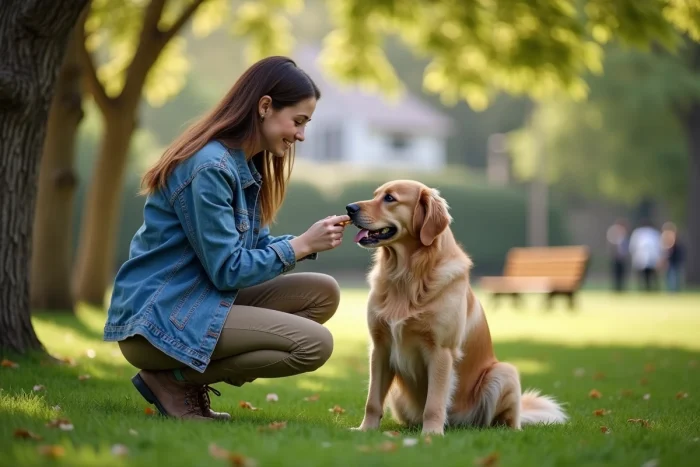
A dog can learn to differentiate more than a hundred words, but the inconsistency of commands often slows its progress. Food rewards are not always enough to motivate an animal, especially in the presence of distractions.
Some experts recommend never punishing a fearful dog, even if its behavior seems inappropriate. However, many owners continue to ignore this advice, hoping to correct what they perceive as problematic behaviors more quickly.
Understanding the Basics of Dog Training: Much More Than Learning to Obey
Dog training goes far beyond memorizing basic commands. Teaching your dog means building a relationship based on trust. From a young age, the puppy absorbs every gesture, every nuance of voice. And the adult, far from being set in its ways, remains capable of learning and evolving. Positive training approaches rely on positive reinforcement: praising what is successful, ignoring what is not, without ever reversing the logic.
Experienced owners know this: consistency is more important than harshness. A dog progresses when it evolves in a predictable and understandable environment. Its behavior is not only a reflection of its intelligence but also of the bond it shares with its owner. Teaching a “sit” or “stay” is just one step. Training your dog requires decoding its signals, recognizing its needs, and entering into its own logic.
To reinforce these learnings, a few concrete principles should be followed:
- Plan brief and regular sessions that respect the attention span of both the puppy and the adult dog.
- Change the context so that the dog assimilates behaviors in different situations.
- Always adjust your expectations to your animal’s personality: each dog progresses at its own pace.
The method developed by chabadog.com is a great example: here, the owner-dog relationship becomes the heart of the learning process. The journey is built together, with perseverance and respect. For the animal, learning is never just about obeying; it’s a dialogue, sometimes silent, punctuated by shared small victories.
Why Your Dog’s Well-Being Also Depends on Its Training?
Training shapes your four-legged companion’s daily life. A dog that understands what is expected of it lives more serenely. This clarity reduces tension, avoids many frustrations, and prevents the emergence of behavioral issues. Dog training is not just a matter of obedience; it builds a strong and lasting bond between the animal and the human. A stable framework and clear markers are what anchor your companion’s well-being.
Often, inappropriate behaviors, destruction, repeated barking, or separation anxiety stem from a lack of reference points. Mastering the basics of family life, learning commands, all of this allows the dog, whether adult or puppy, to gain autonomy and adopt a more relaxed attitude. A calm animal integrates better into family life without generating unnecessary conflicts.
Three beneficial effects result from consistent training:
- A dog that understands what is expected of it approaches each situation with more confidence.
- Repeated tensions disappear, thereby reducing the risks of digestive or skin issues related to stress.
- By anticipating behavioral difficulties, we improve the dog’s life and that of its entire environment.
Adapt your routine, consider your animal’s pace, and value every progress. Well-being is not limited to good physical health: it also encompasses emotional balance and the quality of social life. Thoughtful training nourishes this virtuous circle, leading to a peaceful daily life and unwavering companionship.
Resources and Tips for Progressing Together Daily
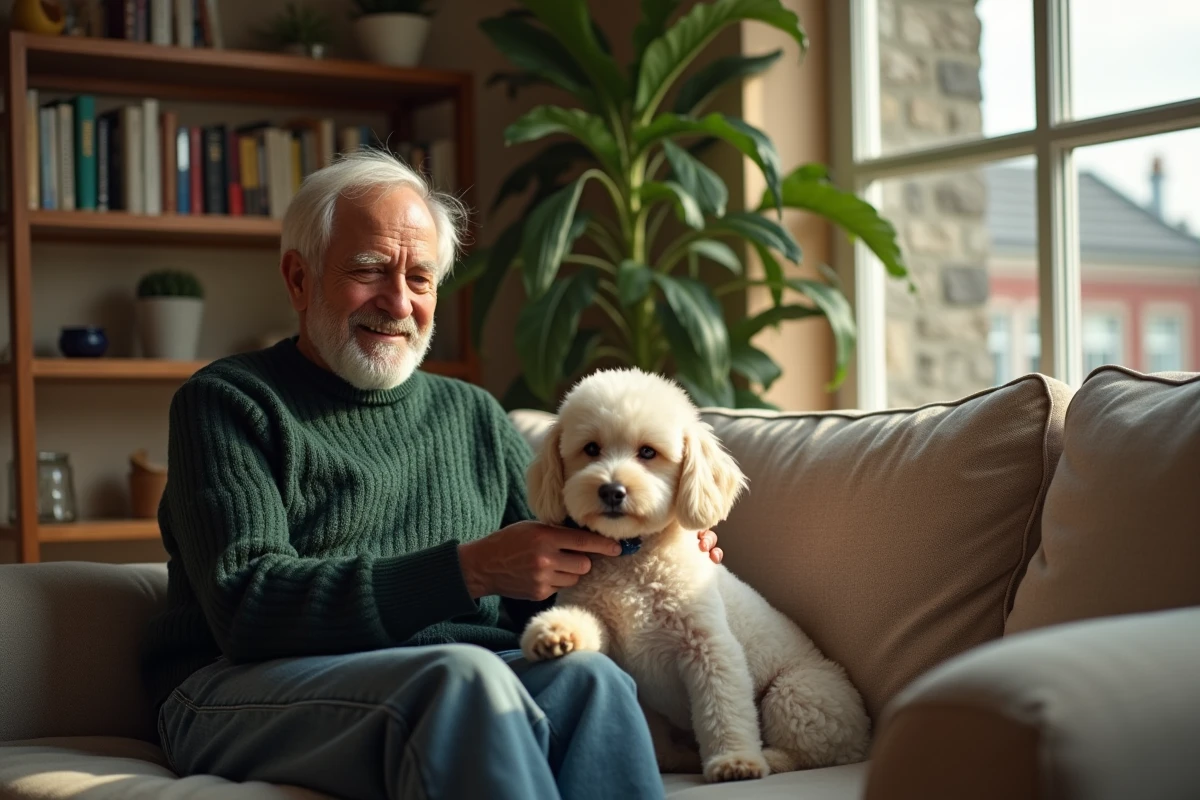
Consulting a dog trainer can transform your relationship with your dog. These specialists, holding a certified training or a professional educator diploma, offer methods tailored to each owner-animal duo. Their expertise allows for analyzing behaviors, developing personalized exercises, and supporting your companion’s evolution, regardless of its age.
Dog clubs also provide excellent opportunities: they allow interaction with other owners and training in varied conditions. The group stimulates socialization, exposes the dog to new situations, and gives a concrete dimension to learning. In the face of anxiety, aggression, or puzzling behaviors, it is wise to consult a veterinarian to rule out any medical causes.
To enrich your approach, various channels exist: specialized books, podcasts, professional videos. These resources refine your training advice and help you establish a routine based on attentive observation and positive reinforcement.
Here are some concrete ideas to stimulate your animal’s learning and development:
- Alternate between puzzle games, educational walks, and recall exercises to maintain its interest.
- Reward its progress and always adapt expectations to its personality and past.
- Maintain the bond with owners who share the same sensitivity towards animal well-being.
Dog training is not improvised: it is built, gesture by gesture, word by word. Being attentive to your dog already opens the door to lasting learning and offers both of you the promise of a peaceful and close relationship.