The anchor bracelet holds a special place in the world of accessories. Neither a watch, nor a chain, nor a classic bangle, it borrows a maritime symbol to adorn the wrist without imposing a specific dress code. Its anchor-shaped clasp and its cord or chain make it a readable, recognizable object, yet discreet enough to slip into an existing wardrobe without causing upheaval.
316L Steel and Marine Cord: What the Technical Sheet of an Anchor Bracelet Hides
Most anchor bracelets sold online feature a clasp made of 316L stainless steel. This mention is reassuring, but it doesn’t tell the whole story. The European REACH regulation governs the release of nickel upon prolonged contact with the skin, not just the raw composition of the metal. A 316L alloy can therefore be compliant on paper and cause problems if its coating degrades after a few months of daily use.
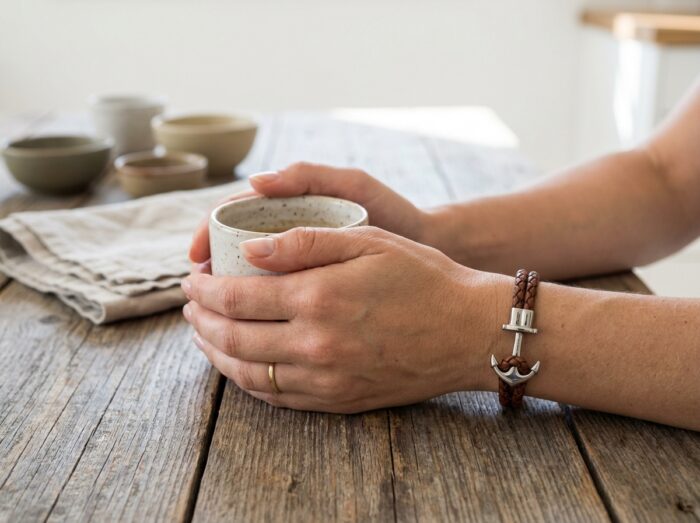
The cord varies from model to model: braided nautical rope, paracord nylon thread, smooth leather, or waxed cord. Each material ages differently. The braided cord absorbs sweat and eventually loosens if not rinsed regularly. Leather marks and develops a patina, which some appreciate while others find off-putting.
In terms of maintenance, 316L withstands saltwater and sweat well, but bleach and chlorinated products attack the passive layer that protects the metal. A rinse with fresh water after swimming, followed by drying, is enough to preserve the piece. Choosing an anchor bracelet to change your look therefore requires checking a few technical details before relying solely on visual appearance.
Men’s or Women’s Anchor Bracelet: An Accessory that Blurs the Lines
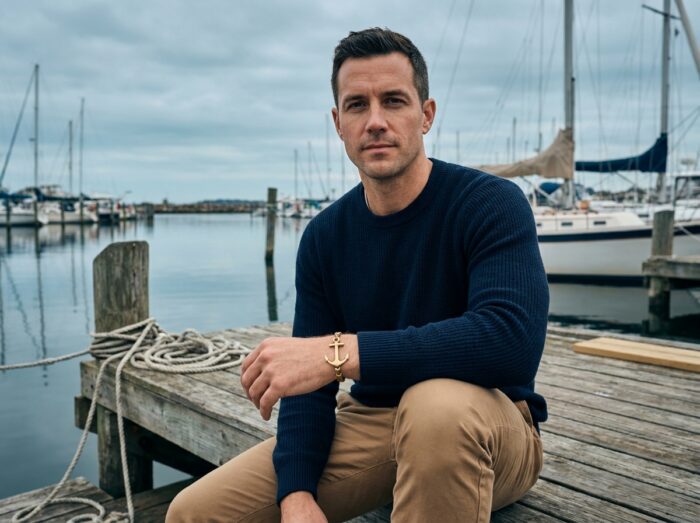
Product sheets often distinguish “men’s” and “women’s” models by the width of the cord or the diameter of the clasp. In reality, the boundary is thin. An anchor bracelet with a thin cord and silver clasp works equally well on a male or female wrist. It is the color of the cord and the size of the anchor that guide the style, not a marketing category.
This gender ambiguity partly explains the success of the anchor bracelet as a gift. It does not require knowing the recipient’s ring size or neck measurement. Most models adjust with a sliding knot or a set of loops on the cord.
Pairing the Anchor Bracelet with Other Pieces
The documented trend for 2025 highlights the stacking of bracelets and mixing materials. An anchor bracelet made of marine rope can serve as a structuring piece in an accumulation rather than an isolated accessory. The idea is to combine textures and volumes: a fine steel bangle, a beaded bracelet, then the braided cord with its anchor clasp that adds visual contrast.
Some guidelines for a readable stack:
- Limit the accumulation to three or four pieces on the same wrist; beyond that, the result becomes cluttered, and the bracelets clash.
- Vary the thicknesses: a thin cord next to a wider bangle creates relief without overwhelming.
- Maintain a unity of metallic tone (silver with silver, gold with gold) so that the anchor clasp remains the focal point.
Changing Style Without Replacing Everything: The Logic of the Anchor Bracelet
Replacing an entire wardrobe is expensive and generates waste. The anchor bracelet plays a different role: it alters the perception of an outfit without changing the main pieces. A white t-shirt and raw jeans shift from a basic look to a coastal one simply by adding a navy cord with an anchor clasp on the wrist.
Style change occurs through detail, not volume. This is what makes the approach gradual: you test an accessory, observe how it integrates with the clothes you already own, and adjust. The anchor bracelet works particularly well in this logic because its maritime symbolism remains neutral. It imposes neither a streetwear style nor a dressed-up style.
What the Anchor Bracelet Does Not Do
It does not replace a watch in a formal professional context. It is also not suitable for all wrist shapes: an oversized anchor clasp on a very thin wrist can imbalance the silhouette. Feedback on this point varies, with some wearers appreciating the statement aspect of a large anchor.
Customization is also limited compared to other jewelry. You can choose the color of the cord, the finish of the metal (brushed, polished, gold-plated), and sometimes engrave initials on the anchor. But the shape of the anchor clasp remains the hallmark of the bracelet, and it is precisely this consistency that makes it a recognizable accessory.
Cord, Chain, or Leather: Which Anchor Bracelet for Which Use
The choice of material for the link determines the use more than the clasp itself. Here are the most common configurations:
- Braided marine cord: the most versatile, suitable for casual daily use, resistant to water but requires rinsing after exposure to salt or chlorine.
- Steel chain: dressier, suitable for office outfits or outings, but heavier and less comfortable in hot weather.
- Smooth or braided leather: adds a vintage touch, develops a patina over time, but does not withstand prolonged immersion and dries slowly.
- Paracord nylon thread: the most mechanically durable, often chosen for an outdoor or military style, dries quickly after swimming.
The same 316L anchor clasp can therefore dress a wrist in four distinct ways depending on the chosen link. It is this modularity that allows for shifting from a casual to a polished look without multiplying purchases.
The anchor bracelet does not transform a style overnight. It acts as a slider that one gradually moves, by changing the cord, pairing it with other pieces, adapting it to the context. This discretion in the transition is probably what explains its longevity in accessory trends, well beyond the initial fashion effect surrounding the maritime style.